

CT Scanning
Access advanced CT scanning at St Thomas Hospital, providing detailed images of organs, bones, soft tissues and blood vessels to support accurate diagnosis and informed clinical care.
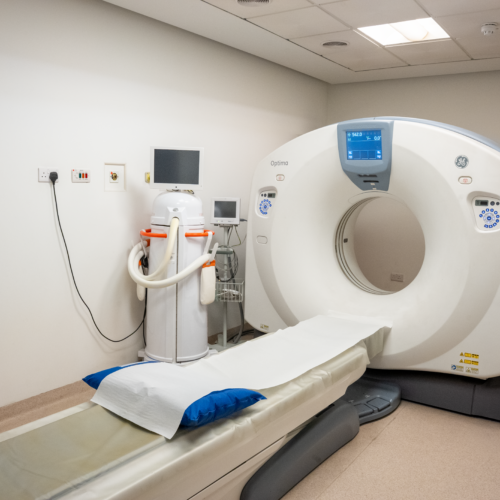
CT Scanning
Types of CT Scans
CT examinations of the brain, face, chest, abdomen, pelvis, spine, bones and joints, kidneys and urinary tract and other body regions, according to clinical indication.
CT scans with contrast
Some CT scans require a contrast dye injected into a vein to help certain organs, tissues or blood vessels show up more clearly. Please tell our radiology team before your appointment if you’ve ever had a reaction to contrast dye or have any known kidney problems.
If your scan requires an injection of contrast dye, you may need a blood test beforehand to check how well your kidneys are working. Our team will let you know if a test is needed.
CT Colonography
CT Colonography is also known as the minimally invasive colonoscopy. Used to diagnose problems of the large intestine, it is the choice for those who want less hassle.
Cardiac CT
CT coronary angiogram examinations, elevating heart care with precision diagnostics, expertise, and a patient-focused approach.
Reports will be issued on the same day as your examination.
CT Services Offered

Brain CT
Detailed imaging of the brain and surrounding structures to support clinical assessment.
Face CT
Detailed imaging of the facial bones, sinuses, eye sockets and surrounding structures.
Chest CT
Detailed imaging of the lungs, airways, blood vessels and other structures within the chest.
Abdominal CT
Imaging of the organs, blood vessels and other structures within the abdomen.
Pelvic CT
Detailed imaging of the organs, soft tissues and structures within the pelvic area.
Spine CT
Detailed imaging of the vertebrae and surrounding bony structures of the spine.
Bones and Joints CT
Imaging of bones and joints to support the assessment of injuries, abnormalities and other conditions.
Kidneys and Urinary Tract CT
Detailed imaging of the kidneys, ureters, bladder and other parts of the urinary system.
Other CT Examinations
CT imaging of other body regions may be performed according to the patient’s clinical needs and referral.
CT Colonography
An examination with supreme image quality and superior comfort, without requiring general anaesthetic and aggressive laxatives.
Cardiac CT
An accurate diagnosis of coronary artery disease, heart conditions, and vascular abnormalities to make informed treatment decisions without requiring general anaesthetic.
FAQs
Your questions, answered
What is a CT scan?
A CT scan uses X-rays and computer technology to create detailed cross-sectional images of structures inside the body.
Is a CT scan painful?
The scan itself is painless. You will need to remain still on the examination table, and some patients may experience temporary warmth if contrast material is administered.
How long does a CT scan take?
The duration depends on the examination. The images may be captured quickly, but preparation and specialist procedures can require additional time.
Will I need contrast material?
Not every CT scan requires contrast. The team will advise you beforehand if it is needed for your examination.
Can I eat and drink before my scan?
This depends on the type of CT scan. Please follow the preparation instructions provided with your appointment.
How Do I Prepare Myself for a Colonoscopy?
Before your Virtual Colonography, you’ll also be provided a special iodine syrup to ingest and detailed information by our team about what you can eat and drink 3 days before.
This may include them advising you to transition to a liquid diet and eat more low fibre foods such as leafy vegetables.
Will I be in Pain?
No, in fact it is one of the benefits of having a Virtual Colonography instead of a regular colonoscopy and no anaesthesia is required.
You can drive and return to your normal routine as soon as your examination is done.
How Long Does it Take to Get the result?
Your consultant will discuss what they’ve seen soon after your procedure is ready.
If any tissue samples or polyps are removed and sent to a laboratory your consultant will arrange a separate appointment to discuss the results of any tests carried out on these samples. These results are usually available within 5 working days.
Do I need a referral?
Referral requirements may vary. Contact the hospital before booking to confirm what documentation is required.